Monday, 15 December 2014

On the Sixth Day of Yule - Ivy

Ivy is the next plant in our evergreen trio.

Ivy grows in a spiral and is often associated with reincarnation and rebirth.  So not only is it an evergreen it also symbolises the rebirth of the sun.

The Roman's associated the ivy with the God Bacchus, god of wine and revelry. Bacchus is often depicted wearing a crown of of ivy leaves, this is because it was believed that ivy could ward off the effect of alcohol.  I will have to give that a try this year but I am doubtful that it will work.  

Although not an actual tree, the Ivy was such an important plant to the Celts that they gave it a place in their Tree Calendar, where is is known as Gort.  The Druids would wrap their heads with ivy to represent clarity of thought. 

The botany of the ivy plant has clearly influenced its symbolism: amongst its various meanings, ivy represents connections and friendships, undoubtedly influenced by the plant’s natural tendency to weave and intertwine during growth. Such connections often play an important role in our celebrations of the holiday season – as we reach out to family and friends, to recall cherished memories and create new ones.


Adapted frin - Deaf Pagan Crossroads

Sunday, 14 December 2014

On the Fifth Day of Yule - Holly

Pagans held evergreen plants sacred and decorated their homes with them over the Yule period.  There are three evergreen plants in particular; Holly, Mistletoe and Ivy. Each of these plants have their own meaning but together they represent the essence of Yule  – a time of rebirth and renewal, a season of promise and hope. Decorating your home with these plants will not only look fantastic, but will also serve as reminders of this Yule theme… taking us back to ancient times and ancient ways. As we await the return of the sun, the magical powers of the holly and the ivy, along with that of the mistletoe bring illumination into our own inner awareness.

Holly was the sacred plant of Saturn and was used at the Roman Saturnalia festival to honour him. Romans gave one another holly wreaths and carried them about decorating images of Saturn with it. Centuries later, in December, while other Romans continued their pagan worship, Christians celebrated the birth of Jesus . To avoid persecution, they decked their homes with Saturnalia holly. As Christian numbers increased and their customs prevailed, holly lost its pagan association and became a symbol of Christmas.

The Druids believed that holly, with its shiny leaves and red berries stayed green to keep the earth beautiful when the sacred oak lost it leaves. They wore sprigs of holly in their hair when they went into the forest to watch their priests cut the sacred mistletoe.

The plant has come to stand for peace and joy, people often settle arguments under a holly tree.  It was also believed that the holly was a symbol of good luck and a place for the god fairies to play.  Holly is believed to frighten off witches and protect the home from thunder and lightning. In West England it is said sprigs of holly around a young girl's bed on Christmas Eve are suppose to keep away mischievous little goblins. It apparently brings about sweet dreams too so another good reason to hang it around your bed!   The English also mention the "he holly and the she holly" as being the determining factor in who will rule the household in the following year, the "she holly" having smooth leaves and the "he holly" having prickly ones.  All of these references give light to "decking the halls with boughs of holly."


Adapted from
thehistoryofchristmas.com

Saturday, 13 December 2014

On the Forth Day of Yule - The Yule Tree

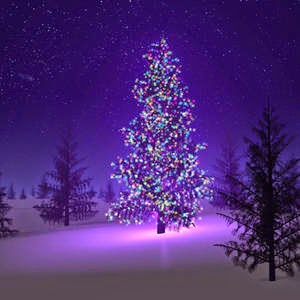
The practice of bringing a whole tree into your home of the Yule/Christmas is a relatively modern German invention, which started in the 16th - 17th Century.  But the tradition has Pagan roots ... no pun intended :-)

Our Pagan ancestors held special meaning to any plant that remained green all year and it was custom to bring these evergreens inside and decorate their homes during the Yule season.  The evergreens were also believed to ward off evil spirits, illness and witches.

Egyptians particularly valued evergreens as a symbol of life's victory over death. They brought green date palm leaves into their homes around the time of the winter solstice.

Early Romans marked the solstice with a feast called the Saturnalia in honor of Saturn, the god of agriculture. The Romans knew that the solstice meant that soon farms and orchards would be green and fruitful. To mark the occasion, they decorated their homes and temples with evergreen boughs.

In Northern Europe the mysterious Druids, the priests of the ancient Celts, also decorated their temples with evergreen boughs as a symbol of everlasting life. The fierce Vikings in Scandinavia thought that evergreens were the special plant of the sun god, Balder.

The Germanic peoples decorated their trees with fruits and and sweets.  We decorate our trees now with ornaments, tinsel and baubles ... all shiny symbols of abundance and the suns return


sources
thehistoryofchristmas.com
christmastreehistory.net

Friday, 12 December 2014

On the Third Day of Yule - Reindeer


REINDEER


If you read the blog yesterday you will know that there are parallels to be drawn between Santa and Odin, and these continue when we look into the origins of Santa's reindeer.

As we know Santa's sledge is pulled by eight flying reindeer, travelling around the world and leaving gifts for children.  Odin had an eight legged horse called Sleipnir which he rode across the sky in the Wild Hunt, carry the souls of the dead to the Underworld.  Children would leave out sugary treats for Sleipnir in exchange for small gifts from Odin.  Very similar to children today leaving a carrot for Santa's reindeer.
The reindeer could also have represented the stags that drew the Norse Goddess, Freya chariot.  She is also said to be a gift giving Goddess

And while on the subject of female energy, all of santas reindeer had to be female.  This is because it is only the female reindeer that still have their antlers during the winter.  They kept them longer than their male counterparts so they could protect their young.  

But where does the flying part come into it?   Well I think it may come from the shamanic peoples of Scandinavia.  This is the territory of the modern day reindeer, and they have discovered a secret. In these regions also grows the hallucinogenic fly agaric mushrooms which is toxic to humans, but not to the reindeer. It has been discovered that if a human drinks the urine of a reindeer who has consumed the mushroom, they can absorb the hallucinogen but not the toxin.  Who first discovered this and what they were doing drinking reindeer urine is anyone's guess though. But a shaman could drink this to embark on his journeying (where his astral body would leave and return his abode through the smoke hole in the roof)  


Thursday, 11 December 2014

On the Second Day of Yule - Who is Santa?

Who is Santa

He's known as Santa Claus, Father Christmas, Sinterklaas, St Nicholas, Kris Kringle, Pere Noel, and many other names. But why so many names?  I think it's because today's Santa is an amalgamation of many different folk figures from around the world.

Today's Santa embodies characteristics of Saturn (Roman agricultural god), Cronos (Greek god, also known as Father Time), the Holly King (Celtic god of the dying year), Father Ice/Grandfather Frost (Russian winter god), Frey (Norse fertility god), the Tomte (a Norse Land Spirit known for giving gifts to children at this time of year), and Thor (Norse sky god who rides the sky in a chariot drawn by goats). Julbock or Julbukk, the Yule goat, from Sweden and Norway, had his beginnings as carrier for the god Thor. Now he carries the Yule elf when he makes his rounds to deliver presents and receive his offering of porridge.  And not to forget the female version, Befana, the gift giving Roman Goddess

But perhaps the more well known Pagan origins of our modern day Santa are drawn from the Norse God Odin.  He as said to ride an eight legged horse by the name of Sleipnir, who could leap great distances.  On Yule Odin would lead a great hunting party that would fly through the sky.  Comparisons have been drawn to this and the flight of Santa and his eight reindeer (more about them tomorrow)  During Odins night time ride children would leave out treats for Sleipnir and Odin would reward them with gifts of food and sweets.  This tradition still continues in Belgium and Germany today.

When Early Christians co-opted the Yule holiday, they replaced the ancient Holly King with religious figures like St. Nicholas, who was said to live in Myra (Turkey) in about 300 A.D. Born an only child of a wealthy family, he was orphaned at an early age when both parents died of the plague. He grew up in a monastery and at the age of 17 became one of the youngest priests ever. Many stories are told of his generosity as he gave his wealth away in the form of gifts to those in need, especially children. Legends tell of him either dropping bags of gold down chimneys or throwing the bags through the windows where they landed in the stockings hung from the fireplace to dry. Some years later Nicholas became a bishop--hence the bishop's hat or miter, long flowing gown, white beard and red cape.

When the Reformation took place, the new Protestants no longer desired St. Nicholas as their gift-giver as he was too closely tied to the Catholic Church. Therefore, each country or region developed their own gift-giver. In France he was known as Pare Noel. In England he was Father Christmas (always depicted with sprigs of holly, ivy, or mistletoe). Germany knew him as Weihnachtsmann (Christmas man). When the communists took over in Russia and outlawed Christianity, the Russians began to call him Grandfather Frost, who wore blue instead of the traditional red. To the Dutch, he was Sinterklaas (which eventually was mispronounced in America and became Santa Claus). La Befana, a kindly witch, rides a broomstick down the chimney to deliver toys into the stockings of Italian children. These Santas were arrayed in every color of the rainbow--sometimes even in black. But they all had long white beards and carried gifts for the children.

All of these Santas, however, never stray far from his earliest beginnings as god of the waning year. As witches, we reclaim Santa's Pagan heritage.


Sources
earthwitchery.com
Paganspath.com

Wednesday, 10 December 2014

On First Day of Yule - The Winter Solstice

This is one of twelve blogs about the history and symbolism behind our Yule celebrations.  This first blog is about The Winter Solstice and the rebirth of the sun.

The celebration of Winter Solstice (also known as Yule) is one of the oldest winter celebrations in the world.  The festival has been celebrated around the world in one form or another for over four thousand years.  Along the way traditions have been created, reinvented and renamed.   

To Pagans the Winter Solstice is one of the four fire festivals, the time when in the Northern Hemisphere, the night is at its longest and the day at its shortest. Darkness has its victory over light , but only briefly as the solstice marks the turning point and the return of the light.

Winter Solstice is primarily the celebration of the rebirth and hope, but many people associate the Winter Solstice, or winter itself with death.  It is the season in which nature is dormant, and in which many plants die off and crops are scarce. 

To our ancestors it was a crucial time, when the sun reached the point in the calendar where it apparently "stood still" in the sky ("sun stand" is the literal meaning of the word solstice) before beginning the return to longer days and shorter nights - something very significant for people whose survival centred on growing enough food and keeping warm.

Ancient people were hunters and spent most of their time outdoors. The seasons and weather played a very important part in their lives. Because of this many ancient people had a great reverence for, and even worshipped the sun.   The Winter Solstice was celebrated as the birth of the sun, the birth of light and therefore the birth of life, and ceremonies and rituals were created to try and stimulate the sun's return.

The ancient Persians lit bonfires on the day of the solstice and their rulers would send aloft birds carrying torches of dried grass to try and rouse the sun.

The Norsemen of Northern Europe saw the sun as a wheel that changed the seasons. It was from the word for this wheel, houl, that the word yule is thought to have come. At mid-winter the Norsemen lit bonfires, told stories and drank sweet ale.

The ancient Romans also held a festival to celebrate the rebirth of the year. Saturnalia ran for seven days from the 17th of December. It was a time when the ordinary rules were turned upside down. Men dressed as women and masters dressed as servants.  The festival also involved decorating houses with greenery, lighting candles, holding processions and giving presents ... sound familiar?

The Zuni of North America honour the solstice by putting up plates on the walls of their homes which are lit by the suns passing through a small window only one day a year ... the winter solstice.  This reminded me of the winter solstice sun illuminating the passageway and chamber at Newgrange in Ireland.  Once their Sun Priest declares the actual moment of the sun's rebirth the festivities start.  Starting with 12 kachina clowns performing a ritual dance along with effigies of 12 foot high birds who were seen as messengers from the Gods.

Yule is a time throughout time that honours love and new birth, as well as the collective unity of man. It also works well as a date for the birth of Sun Gods, miraculous children that bring new life and new hope into the world.  

The Persians had their Sun God Mithra, who was born, fully grown from a rock on 25th December.  From the Egyptian pantheon we see Isis giving birth to the Sun God Horus on the Winter solstice.  And of course the most well known Sun God of modern day is Jesus Christ, born to the Virgin Mary on 25th December.  The date of Jesus's birth is a much debated topic as it is believed to have been changed to fit with the pre-existing Solstice traditions but that topic is a whole other blog :-)  

Take time out this Winter Solstice from the hustle and bustle of planning your festivities and celebrate the truly important things in life: your family, your children, your home and looking forward to a wonderful year to come.

Tomorrow's blog - Who is Santa?

Sources:
Kitchen Witch Blog
Celebrating Midwinter - Waverly Fitzgerald

Image from Stonehenge tours website

Sunday, 7 December 2014

Travelling Musings

Living in a town and working full time means that I don't get to spend as much time as I would like out in nature and walking the land.  But I do get to drive through the countryside quite often 


During my journeys I watch the seasons turn, I see the first buds on the trees as spring starts to stir from it's winters slumber and fields full of lambs, playing and skipping.  I watch as the trees become full of leaves and abundance at full summer.  I enjoy driving past fields full of pink poppies and watch as the farmers start to harvest their crops (getting stuck behind trackers isn't so pleasant though) 

But my favourite time of year has to be autumn.  Watching as the leaves on the trees turn into glorious colours.  This symbolises the year going out in a final blaze of glory, like the finale at a firework display when the best and most colourful of fireworks are left til last.  Autumn for me is Winter's Spring.  

But what struck me as I was driving to a meeting this week is that the trees look most beautiful when they are waning in energy.  

They don't fight the ageing process or the cycle of their lives; they surrender to it and they are stunning.   So even in death there is beauty to be found if we only just surrender